
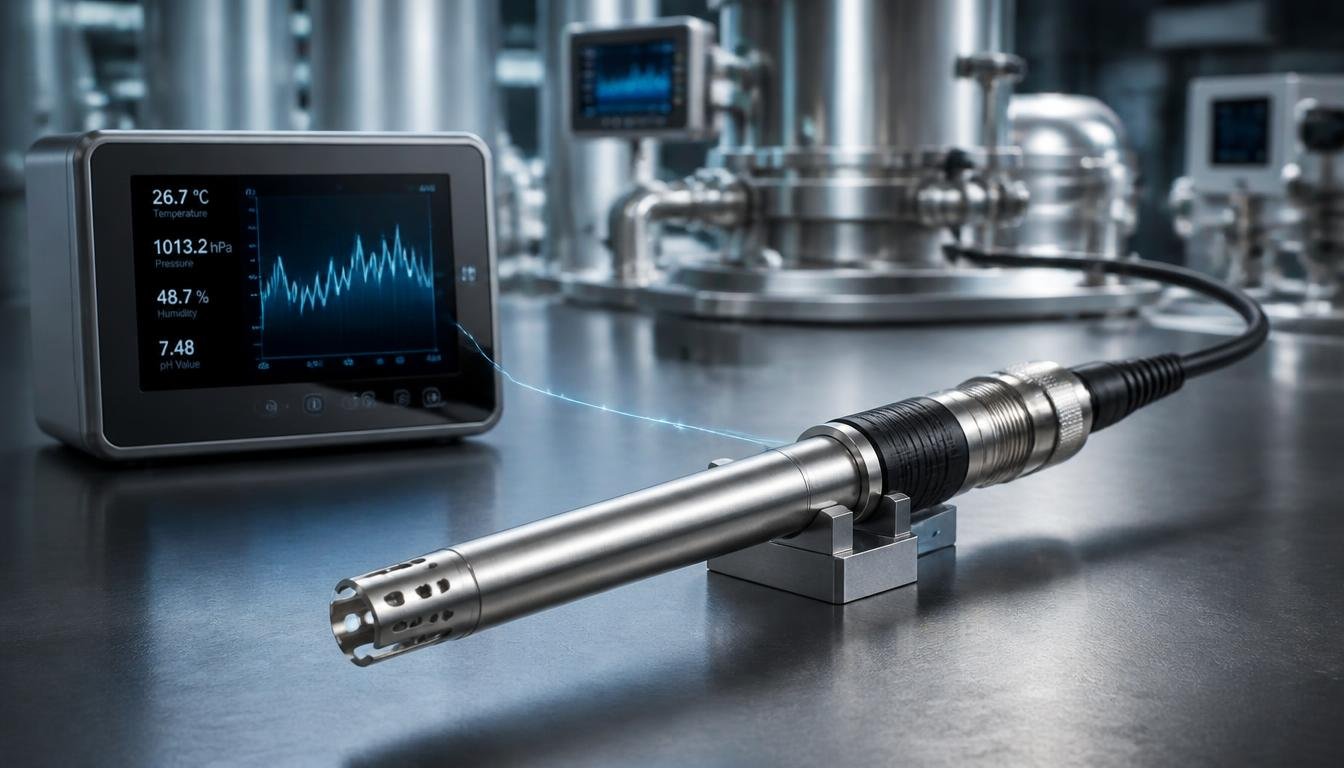
The word messonde can be confusing because it appears in several different forms across the internet. In technical contexts, it is most closely associated with the German term Messsonde, which translates into English as a measuring probe, measurement probe, test probe, or measuring sensor. In simple terms, a measuring probe is the part of a measurement system that interacts with the environment being tested and helps collect information about a physical or chemical condition. German technical terminology sources use Messsonde for measurement devices and probes used in areas such as sensing and data collection.
The spelling messonde can therefore lead to different interpretations depending on where you encountered it. Some recent websites use it as an emerging conceptual term associated with exploration, curiosity, creativity, or adaptability, but those meanings are not standardized. Other sources use it in a technical sense connected with measuring probes. Understanding that distinction is important because the correct meaning depends heavily on the context.
What Does Messonde Mean?
In a technical context, messonde is best understood as a reference to a measuring probe. The standard German spelling is Messsonde, and established German-English dictionaries translate it as “measuring probe,” “test probe,” “measuring head,” or “measuring sensor.”
A measuring probe is generally designed to detect or measure a particular property. Depending on its construction and purpose, it may measure temperature, pressure, oxygen concentration, fluid characteristics, electrical properties, thickness, radiation, or other measurable conditions. The probe itself may contain a sensing element, while the wider measurement system processes the signal and presents the resulting value.
Messonde vs. Messsonde
| Term | Meaning | Typical context |
|---|---|---|
| Messonde | Variant or shortened spelling encountered online | General searches and some translated material |
| Messsonde | Standard German technical term | Engineering and measurement technology |
| Measuring probe | Common English translation | Technical documentation |
| Measuring sensor | Another English equivalent | Instrumentation and sensing |
| Test probe | Context-dependent English translation | Testing and diagnostics |
The distinction matters because Messsonde is the established German technical term. A German federal terminology resource specifically lists “Messsonde/-Gerät” and gives “Measuring Probe/Device” as the English equivalent.
How Does a Measuring Probe Work?
A measuring probe works by interacting with the quantity or environment that needs to be measured. The sensing element detects a physical or chemical change and converts that change into a usable signal. The signal can then be transmitted to an instrument, controller, computer, or other measurement system.
The exact process depends on the type of probe. A temperature probe, for example, needs a sensing element whose electrical characteristics change with temperature. A pressure probe uses a sensing mechanism that responds to pressure. An oxygen probe may use a chemical or electrochemical sensing principle. The underlying technology changes from one application to another, but the central purpose remains the same: detect a measurable condition and turn it into useful information.
The Basic Measurement Process
A simplified measurement process looks like this:
Environment → Probe → Sensor → Signal → Processing → Measurement Result
The probe is positioned where measurement is required. Its sensing element responds to the target property, producing a signal that can be interpreted by connected electronics or measurement equipment. Depending on the application, the system may display the result immediately, record it for later analysis, or use it to control another device.
Types of Measuring Probes
There is no single universal type of Messsonde. Measuring probes are designed around the property being measured, the environment in which they operate, and the required accuracy.
Temperature Measuring Probes
Temperature probes measure thermal conditions and are widely used in laboratories, manufacturing systems, HVAC equipment, food processing, and industrial monitoring.
The sensing technology can vary considerably. Some probes use resistance-based sensors, while others use thermocouples or other sensing principles. The physical design also changes according to whether the probe needs to measure air, liquid, a solid surface, or an internal component.
Pressure Measuring Probes
Pressure probes are designed to detect pressure within gases or liquids. They can be used in industrial equipment, fluid systems, process monitoring, and laboratory applications.
The probe must be suitable for the pressure range and environment in which it operates. Factors such as temperature, fluid compatibility, installation method, and required measurement accuracy can all influence the appropriate design.
Oxygen and Gas Probes
Some measuring probes detect oxygen concentration or other gases. These systems can be important in environmental monitoring, industrial processes, medical applications, and scientific research.
The sensing method depends on the gas and application. Some systems use electrochemical sensing, while others rely on optical or other technologies. The probe must also be designed to operate reliably within the environment being measured.
pH and Chemical Probes
Chemical measurement probes can be used to determine characteristics of liquids and other materials. A pH probe, for instance, is designed to measure acidity or alkalinity.
These probes are especially important where maintaining a specific chemical condition matters. Water treatment, laboratories, industrial processing, agriculture, and environmental monitoring are examples of areas where chemical measurements can play an important role.
Thickness and Surface-Measuring Probes
Some measuring probes are designed to measure physical dimensions or material properties without damaging the object being tested. Patent documentation, for example, describes measuring-probe designs intended for nondestructive measurement of thin-layer thicknesses, including measurements on curved surfaces and inside accessible cavities.
This illustrates an important point: a measuring probe does not necessarily need to be a simple temperature or pressure sensor. Probe technology can be highly specialized for a particular measurement problem.
Where Are Messonde-Type Probes Used?
Measuring probes appear in many technical environments because measurement is fundamental to modern engineering and science.
| Industry | Example measurement | Possible probe type |
|---|---|---|
| Manufacturing | Temperature, pressure, dimensions | Industrial measuring probe |
| Environmental science | Water quality, oxygen, temperature | Environmental probe |
| Healthcare | Physiological or diagnostic measurements | Medical measuring probe |
| Automotive | Temperature, pressure, gases | Vehicle sensor/probe |
| Laboratories | Chemical and physical properties | Laboratory probe |
| HVAC | Air temperature and other conditions | Temperature or environmental probe |
| Water treatment | pH, oxygen, conductivity | Water-quality probe |
The German Federal Agency for Nature Conservation’s terminology database includes several specific forms of Messsonde, including CTD measuring probes, pH meters, oxygen probes, and XBT/XCBT measuring probes.
Why Are Measuring Probes Important?
A measurement is only useful when the system collecting the information is appropriate for the task. This makes the probe a critical component rather than a minor accessory.
A poorly selected probe can produce unreliable readings, respond too slowly, fail in the operating environment, or measure the wrong property. In contrast, a properly selected probe can provide dependable information that supports monitoring, quality control, automation, research, and safety.
Accuracy Is Only One Consideration
It is tempting to judge a measuring probe solely by its accuracy, but real-world performance involves more than one specification. Response time, operating range, durability, environmental resistance, calibration requirements, installation method, and compatibility with the measurement system can all matter.
For example, a highly accurate probe may not be the best choice if it cannot withstand the temperature, pressure, chemicals, vibration, or moisture present in the intended environment. The best probe is therefore the one that matches the complete measurement requirement rather than simply having the most impressive specification on paper.
How to Choose the Right Measuring Probe
Choosing a measuring probe starts with defining exactly what needs to be measured. Once the target property is known, the operating environment and required performance can be considered.
Identify What You Need to Measure
Start with the actual measurement objective. Is the goal to measure temperature, pressure, humidity, oxygen, pH, thickness, flow, radiation, or another property?
This sounds obvious, but it prevents a common mistake: choosing a probe based on its appearance or price before understanding the measurement requirement.
Consider the Operating Environment
The environment can determine whether a particular probe is suitable. Liquid immersion, high temperatures, corrosive chemicals, mechanical vibration, outdoor exposure, and confined spaces can all require different probe designs.
A probe intended for a controlled laboratory environment may not be suitable for a harsh industrial installation. The surrounding conditions should therefore be considered before selecting equipment.
Check the Measurement Range
Every measuring device has an operating range. A probe designed for relatively low temperatures, for example, should not automatically be assumed to work accurately at extreme temperatures.
The expected minimum and maximum values should be compared with the probe’s specifications, with enough margin to avoid operating continuously at the edge of its capabilities.
Consider Calibration
Calibration helps ensure that the measurement produced by a probe corresponds appropriately to a known reference. The required calibration procedure and frequency depend on the application and the type of instrument.
In applications where measurement accuracy affects safety, quality, regulatory compliance, or expensive processes, calibration and verification deserve particular attention.
Common Mistakes When Using Measuring Probes
One common mistake is assuming that every sensor or probe can be used interchangeably. Different probes can use completely different sensing technologies and may require specific instruments, connectors, calibration procedures, or installation conditions.
Another mistake is ignoring the environment. A probe may perform perfectly under laboratory conditions but become unreliable when exposed to excessive heat, contamination, vibration, moisture, pressure, or chemicals.
Incorrect placement can also affect measurement quality. Even a technically capable probe may produce misleading results if it is installed where it does not accurately represent the condition being measured.
Messonde in Modern Measurement Systems
Modern measurement rarely ends with the probe itself. In many applications, the probe forms one part of a larger system that includes signal conditioning, data acquisition, software, communication technology, and automated controls.
A measurement can therefore become part of a continuous monitoring process. Instead of checking a value manually once a day, a connected system may collect measurements repeatedly, store historical information, identify changes, and trigger an action when a predefined condition occurs.
This development has made sensing technology increasingly important in automated manufacturing, environmental monitoring, scientific research, and connected equipment.
Is Messonde an Official English Word?
The answer depends on what is meant by messonde.
The exact spelling “messonde” does not appear to have a single widely accepted English dictionary definition corresponding to a modern standalone concept. In technical contexts, however, it is closely related to the established German word Messsonde, which clearly means a measuring probe. Established terminology and dictionary sources support this technical interpretation.
At the same time, several recent websites use “Messonde” as a newer conceptual term involving ideas such as exploration, curiosity, creativity, adaptability, and personal development. Those meanings should be treated cautiously because they are inconsistent across sources and do not appear to represent one standardized definition.
Why Context Matters
If you found messonde in an engineering manual, product specification, laboratory document, or translated German technical material, the measuring-probe interpretation is likely the relevant one.
If you encountered it in a lifestyle blog, creative discussion, or recently published conceptual article, the writer may be using the word in a newer, metaphorical sense.
That distinction prevents an important misunderstanding: the technical meaning of Messsonde is supported by established terminology, while newer conceptual uses of “messonde” are still fluid.
Messonde and the Future of Measurement
Measurement technology continues to evolve as sensors become smaller, more connected, and more integrated with digital systems. A probe can increasingly become part of a broader network rather than functioning as an isolated instrument.
This shift is particularly relevant to automation and continuous monitoring. When measurement data can be collected and processed automatically, organizations can respond to changing conditions faster and make decisions using current information rather than occasional manual observations.
The fundamental role of the probe, however, remains unchanged. Even sophisticated digital systems depend on reliable information from the physical world. If the initial measurement is inaccurate or inappropriate, the quality of everything built on top of it can suffer.
Frequently Asked Questions About Messonde
What is a messonde?
Messonde is commonly encountered as a variant or misspelling associated with the German technical term Messsonde, meaning a measuring probe or measurement sensor. A measuring probe detects a physical or chemical condition and provides information that can be processed by a larger measurement system.
What does Messsonde mean in English?
The German word Messsonde can be translated as “measuring probe,” “test probe,” “measuring head,” or “measuring sensor,” depending on context.
Is Messonde the same as a sensor?
Not necessarily in every technical context. A probe may contain one or more sensing elements and may form part of a larger measurement system. In everyday technical language, the terms can sometimes overlap, but the exact distinction depends on the equipment and application.
What can a measuring probe measure?
A measuring probe can be designed to measure many different properties, including temperature, pressure, oxygen concentration, pH, thickness, electrical characteristics, and other physical or chemical conditions. The actual measurement capability depends on the probe’s sensing technology.
Where are measuring probes used?
Measuring probes are used in manufacturing, engineering, laboratories, environmental monitoring, healthcare, automotive systems, water treatment, HVAC, and many other fields. Specialized probes are designed for specific measurement requirements and environments.
Is Messonde a German word?
The established German technical term is Messsonde. It is used for measuring probes and related measurement devices. “Messonde” appears as a variant in some online and translation contexts, but the standard technical spelling is Messsonde.
Does Messonde have another meaning?
Some recent online sources use “Messonde” as an emerging conceptual term associated with exploration, creativity, adaptability, or personal growth. Because these definitions vary considerably, they should not be treated as a single established meaning.
How do I choose the right measuring probe?
Start by identifying what you need to measure, then consider the required measurement range, accuracy, response time, operating environment, installation requirements, compatibility, durability, and calibration needs. The correct choice depends on the complete application rather than one specification alone.
Conclusion
Messonde is an unusual keyword because its meaning depends heavily on context. In technical usage, the most reliable interpretation is its connection with the German term Messsonde, a measuring probe or measuring sensor used to detect physical or chemical conditions. Established terminology sources support this interpretation, while specialized applications range from environmental and laboratory measurement to industrial testing and nondestructive inspection.
At the same time, newer websites have begun using “Messonde” as a broader conceptual expression connected with exploration and personal development. That usage is much less standardized, so it is better described as an emerging interpretation rather than an established dictionary definition.
If you encountered the word in a technical document, product description, engineering context, or translated German material, measuring probe is the interpretation worth investigating first. Understanding the context can save you from confusing an established technical term with a newer internet-created meaning.




Leave a Reply