
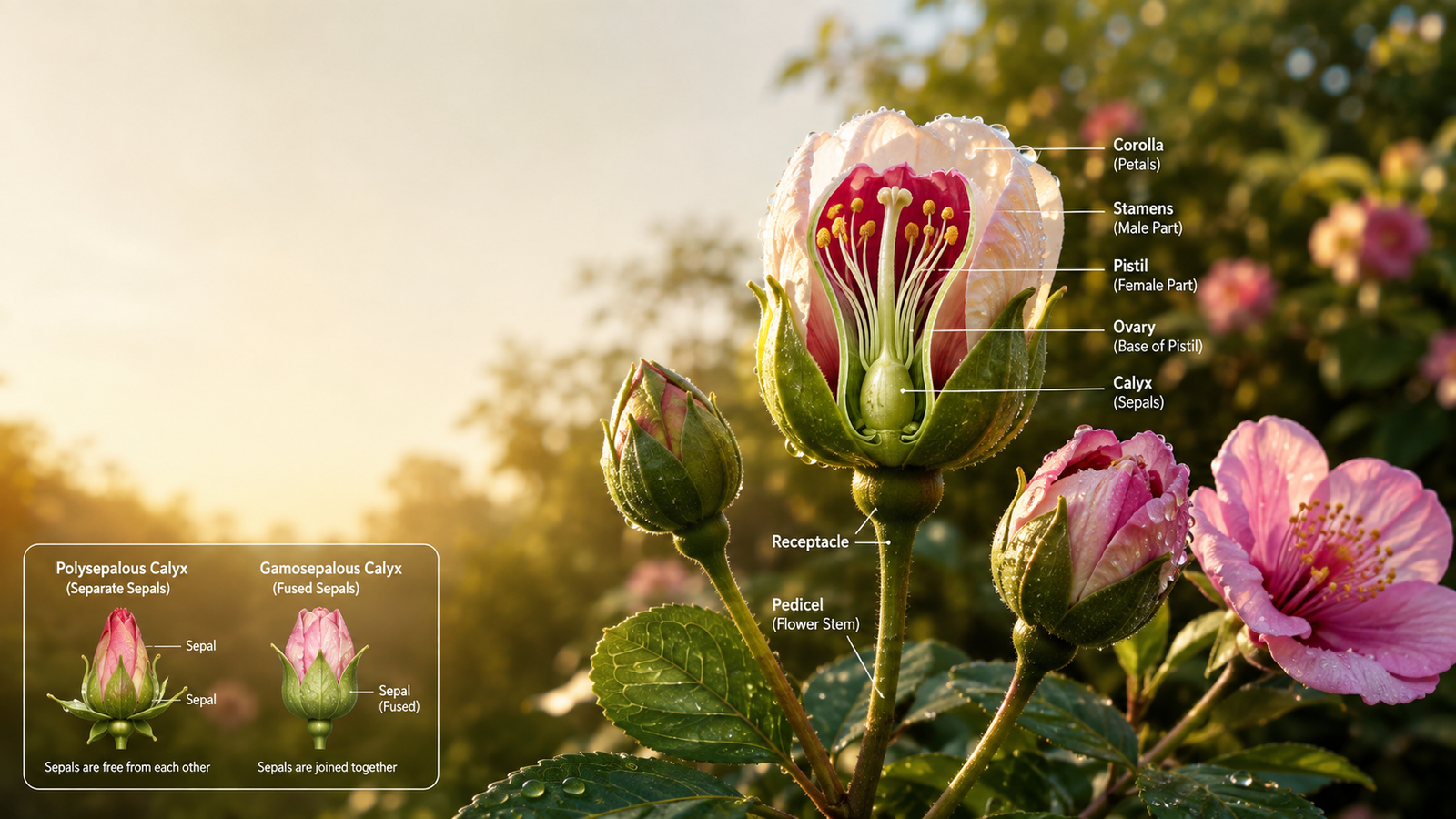
The calyx definition in botany refers to the outermost whorl of a flower, made up of small leaf-like structures known as sepals. These sepals surround and protect the flower while it is still in the bud stage. Although the calyx may appear simple compared to colorful petals, it plays a vital role in the growth, protection, and survival of flowering plants. In many species, the calyx continues to support the flower even after blooming, while in others it protects the developing fruit after fertilization. Understanding the calyx helps students, gardeners, botanists, and plant enthusiasts appreciate how flowers are built and how each part contributes to successful reproduction.
Biology Overview Table
| Feature | Details |
|---|---|
| Scientific Term | Calyx |
| Category | Flower Structure |
| Made Of | Sepals |
| Position | Outermost floral whorl |
| Primary Function | Protects the flower bud |
| Color | Usually green, sometimes colorful |
| Present In | Flowering plants (Angiosperms) |
| Importance | Protection, support, photosynthesis, fruit development |
| Related Structures | Corolla, Stamens, Pistil |
| Field of Study | Botany |
What Is the Calyx?
The calyx is the first layer that forms around a developing flower. Before a flower opens, its delicate petals and reproductive organs remain enclosed inside the sepals. These sepals act like a protective shield against insects, wind, rain, dehydration, and sudden temperature changes. Once the flower matures, the sepals may either remain attached or fall away depending on the plant species. While many people focus on colorful petals, the calyx quietly performs essential tasks that allow the flower to reach maturity successfully. Without this protective covering, young flower buds would be much more vulnerable to environmental damage.
Calyx Definition in Simple Words
In simple language, the calyx is the green outer covering of a flower that protects it before it blooms. It consists of individual sepals that wrap around the flower bud much like protective leaves. Imagine a wrapped gift where the wrapping paper keeps everything safe until it is ready to be opened. Similarly, the calyx safeguards the flower until it is fully developed. This easy explanation makes the concept understandable for beginners while still reflecting its scientific importance.
Origin of the Word Calyx
The word “calyx” comes from the Greek word kalyx, meaning cup or covering. This origin perfectly describes the appearance of the structure because the sepals often form a cup-like enclosure around the base of the flower. Over centuries, botanists adopted this term to describe one of the essential floral parts that contributes to plant development and reproduction.
Structure of the Calyx
The calyx consists of one or more sepals arranged in a circular pattern around the flower bud. In most plants, these sepals are green because they contain chlorophyll, allowing them to perform photosynthesis like leaves. However, some species develop brightly colored sepals that attract pollinators when petals are absent or less noticeable. Depending on the plant, sepals may remain separate or fuse together to create a tube-like structure. Their thickness, shape, texture, and size vary widely among flowering plants, reflecting different environmental adaptations.
Parts of the Calyx
The calyx includes several important structural features that help determine its appearance and function.
| Part | Description |
| Sepals | Individual leaf-like structures |
| Base | Point where sepals attach to the flower |
| Margin | Edge of each sepal |
| Apex | Tip of the sepal |
| Surface | May be smooth, hairy, or waxy |
Types of Calyx
Botanists classify the calyx according to the arrangement and attachment of sepals. These classifications help identify different plant families and understand floral evolution.
Polysepalous Calyx
A polysepalous calyx has sepals that remain separate from one another. Each sepal can be clearly distinguished, giving the flower a more open appearance. Plants like mustard and rose commonly display this arrangement. Separate sepals often provide greater flexibility during flower opening while still protecting the bud effectively.
Gamosepalous Calyx
A gamosepalous calyx contains sepals that are fused together into a single cup or tube. This type provides stronger protection because the sepals form one continuous structure around the flower. Flowers such as hibiscus and datura commonly exhibit a gamosepalous calyx. The fused arrangement also contributes to the flower’s unique appearance and helps support delicate petals.
Functions of the Calyx
The calyx performs several important biological functions throughout the flower’s life cycle. Although its role is often overlooked, it contributes significantly to plant health and successful reproduction.
The first and most obvious function is protection. Young flower buds contain fragile petals and reproductive organs that could easily be damaged by insects, strong winds, excessive sunlight, heavy rain, or sudden weather changes. The calyx acts as a natural shield until the flower reaches maturity.
Another important function involves photosynthesis. Since many sepals contain chlorophyll, they are capable of producing food for the developing flower. This additional energy supports healthy growth during the early stages of development when petals are still enclosed.
The calyx also provides structural support. Even after blooming, sepals help hold petals in place and maintain the overall stability of the flower. In certain plants, they continue supporting the fruit after fertilization, reducing physical stress as the fruit develops.
Some species possess colorful sepals that resemble petals. In these flowers, the calyx contributes to attracting bees, butterflies, birds, and other pollinators. This adaptation increases the chances of successful pollination, particularly when petals are small or absent.
Importance of the Calyx in Flowering Plants
The calyx is much more than a protective covering. It serves as one of the earliest defense systems during flower formation and continues contributing throughout the reproductive process. Healthy sepals ensure that flower buds survive environmental challenges until they are ready to open. In fruit-bearing plants, persistent sepals help support developing fruits and sometimes even assist in seed dispersal. Botanists frequently examine calyx characteristics when identifying unknown plant species because sepal arrangement, shape, and attachment often differ among plant families.
Examples of Plants with a Visible Calyx
Many familiar plants clearly display their calyx, making it easy to observe this floral structure in everyday life.
| Plant | Type of Calyx | Special Feature |
| Rose | Polysepalous | Separate green sepals |
| Hibiscus | Gamosepalous | Fused sepals forming a cup |
| Tomato | Persistent | Remains attached to fruit |
| Eggplant | Persistent | Covers the top of the fruit |
| Strawberry | Persistent | Visible around the fruit base |
| Mustard | Polysepalous | Distinct free sepals |
Difference Between Calyx and Corolla
Many beginners confuse the calyx with the corolla because both surround the flower. However, they differ greatly in appearance and purpose.
| Feature | Calyx | Corolla |
| Made of | Sepals | Petals |
| Position | Outermost | Inside calyx |
| Color | Usually green | Usually colorful |
| Main Function | Protection | Attracting pollinators |
| Photosynthesis | Often possible | Rare |
Calyx in Fruit Development
In several flowering plants, the calyx remains attached even after the petals fall. This persistent calyx protects the developing fruit from mechanical damage, insects, and harsh environmental conditions. Tomatoes, eggplants, and strawberries provide familiar examples where the calyx remains visible throughout fruit growth. Besides offering protection, persistent sepals sometimes contribute to water regulation and improve fruit stability until maturity.
Why Students Learn the Calyx Definition
Students studying biology encounter the calyx as one of the fundamental floral structures. Learning its definition makes it easier to understand flower anatomy, plant reproduction, pollination, taxonomy, and agricultural science. Since many competitive examinations include questions about flower parts, mastering the concept provides both academic and practical value. The calyx also serves as an excellent example of how even simple plant structures perform multiple biological functions.
Common Misconceptions About the Calyx
Many people assume the calyx has no purpose once a flower blooms. In reality, numerous plant species retain their sepals to support flowers and protect developing fruits. Another misconception is that sepals are always green. While green is the most common color due to chlorophyll, several ornamental plants produce brightly colored sepals that contribute to pollinator attraction. Some also believe every flower has separate sepals, but fused sepals are equally common across many plant families.
Conclusion
Understanding the calyx definition provides valuable insight into how flowering plants develop, survive, and reproduce. Although it is often overshadowed by colorful petals, the calyx performs essential functions including protecting flower buds, supporting blooming flowers, assisting photosynthesis, and safeguarding developing fruits. Its structure varies among species, yet its importance remains universal across the plant kingdom. Whether you are a biology student, gardener, teacher, or simply curious about plant science, learning about the calyx offers a deeper appreciation of the remarkable design found in every flower. Continue exploring plant anatomy to discover how each floral part works together to sustain life and maintain the incredible diversity of flowering plants.
Frequently Asked Questions
What is the calyx definition in biology?
The calyx is the outermost whorl of a flower made up of sepals. Its primary purpose is to protect the developing flower bud before it opens and to provide additional support during flowering and fruit development.
What are sepals?
Sepals are small leaf-like structures that collectively form the calyx. They are usually green and surround the flower bud until it is ready to bloom.
What is the main function of the calyx?
The calyx mainly protects young flower buds from insects, weather, dehydration, and physical damage. In many plants, it also supports flowers, performs photosynthesis, and protects developing fruits.
What is the difference between calyx and corolla?
The calyx consists of sepals and forms the outermost floral layer, while the corolla consists of petals and is mainly responsible for attracting pollinators through bright colors and fragrance.
Is the calyx always green?
No. Although most sepals are green because they contain chlorophyll, some plants have brightly colored sepals that help attract pollinators and enhance the flower’s appearance.
What are the two main types of calyx?
The two primary types are polysepalous, where sepals remain separate, and gamosepalous, where sepals are fused together into a single structure.
Why is the calyx important in fruit development?
In many species, the calyx remains attached after flowering and continues protecting the developing fruit. It also provides structural support and may reduce damage during fruit growth.
Can flowers survive without a calyx?
Some flowers can still develop if the calyx is damaged, but removing it during early development often reduces protection and may affect normal flower growth, making the plant more vulnerable to environmental stress.




Leave a Reply