
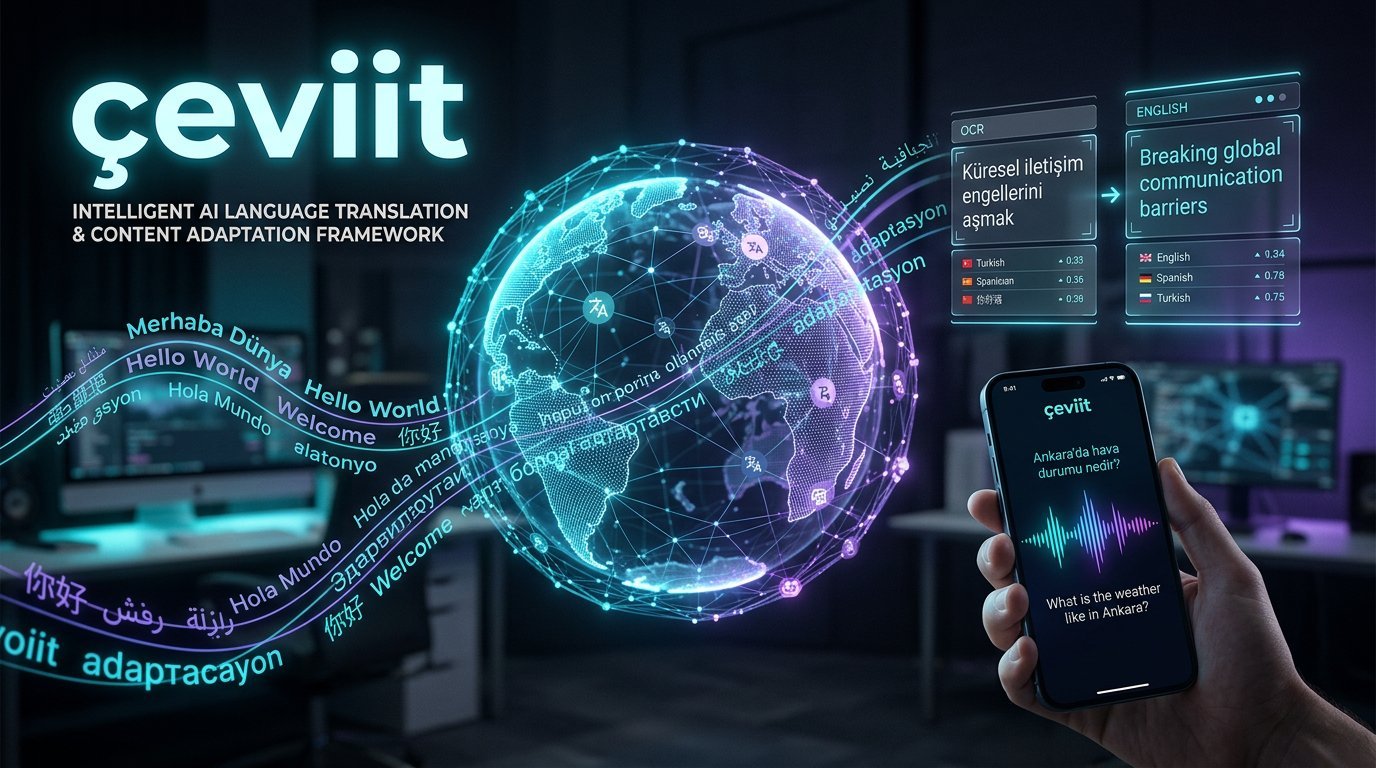
In an increasingly interconnected global economy, the ability to bridge linguistic barriers and transform information across languages is no longer a luxury—it is a fundamental operational necessity. If you have recently encountered the term çeviit while exploring online translation tools, language software, or digital content strategies, you are examining a vital shift in how modern society converts and adapts human knowledge. Derived from the Turkish term for translation and evolving into a widespread internet query, çeviit represents both the daily user search for instant online translation engines and the broader methodology of intelligent content adaptation. Unlike traditional word-for-word translation, which frequently stumbles over idiomatic nuances and cultural context, modern çeviit frameworks leverage neural machine learning, natural language processing, and real-time contextual analysis to ensure translated messages retain their original clarity, tone, and strategic impact. Whether you are an international student translating academic papers, a business executive expanding e-commerce operations into foreign markets, or a content creator adapting multimedia assets for global audiences, mastering this concept removes cross-cultural friction and unlocks unprecedented communication speed. Understanding how these intelligent systems operate behind the screen empowers users to select the right tools, safeguard sensitive telecommunications data, and achieve high-fidelity language conversion across all digital mediums. As digital language tools continue to evolve, learning how to leverage context-aware software grants individuals and organizations a permanent competitive advantage across international markets.
Decoding Çeviit: Etymology, Meaning, and Core Concept
To fully understand why çeviit has become such a widely discussed topic in modern digital technology and language research, one must examine its linguistic origins and practical usage patterns. Rooted in the Turkish word “çeviri” and its active verb form “çevir” (meaning “to translate” or “turn into”), the term originally functioned as a direct search query typed by millions of users seeking quick online translation engines. Over time, as social media platforms, search algorithms, and digital forums expanded globally, internet culture adopted the phonetic variant çeviit as a broader umbrella concept for online translation utilities and digital text transformation. When online users query this term today, they are seeking instant translation services, dictionary definitions, and practical guidance on converting text, voice, and visual media across diverse world languages. Recognizing this etymological trajectory clarifies how casual online search queries evolve into recognized technological concepts. Observing these vocabulary shifts provides vital insight into how online communities interact with emerging software capabilities.
Beyond its role as a high-volume search query, çeviit embodies a fundamental shift from rigid mechanical translation toward intelligent, context-aware content adaptation. Traditional machine translation engines relied on static dictionaries and strict grammatical rules, often producing awkward, literal renditions that lost subtle emotional resonance and cultural relevance. In contrast, modern çeviit frameworks evaluate entire paragraphs, sentence structures, and domain contexts simultaneously to select word choices that feel natural to native speakers. This distinction is vital because a message that is grammatically accurate can still fail completely if it ignores regional dialects, local idioms, or industry jargon. By bridging the gap between raw linguistic conversion and genuine human communication, this concept establishes a higher benchmark for digital translation software. Modern technology users increasingly demand solutions that preserve original intent while optimizing readability across diverse international audiences. Adopting this holistic approach ensures that communication remains clear, engaging, and persuasive across all target markets.
The Linguistic Path from Query to Tech Terminology
Linguistic evolution across digital networks happens rapidly when high search volume intersects with emerging software capabilities. The phrase çeviit initially gained traction across regional search logs as a shorthand typo or phonetic spelling variation for web-based translation portals and dictionary apps. As automated search suggestions and mobile auto-correct features processed millions of daily queries, search engines indexed extensive user documentation, app downloads, and language guides under this specific keyword string. Today, technology analysts and content strategists use the term to categorize smart translation utilities, automated localization workflows, and user-centric language technology frameworks. Tracking this linguistic path illustrates how digital search behavior actively shapes modern technical vocabulary across global software markets. Software developers pay close attention to these organic search trends when naming and marketing next-generation translation tools.
Çeviit vs. Traditional Translation: Understanding the Distinction
Dissecting modern telecommunications requires establishing a clear distinction between basic mechanical translation and intelligent content adaptation. Basic translation focuses strictly on exchanging words from a source language to a target language based on dictionary definitions and literal rules. Conversely, çeviit incorporates contextual reasoning, cultural localization, and format restructuring to ensure the output resonates perfectly with target readers. For example, converting a foreign marketing slogan requires rewriting metaphors and adjusting emotional tone rather than translating words verbatim. Understanding this functional difference helps businesses avoid embarrassing marketing blunders and ensures that cross-border communications remain engaging, persuasive, and culturally respectful. Taking the time to adapt message formatting properly guarantees high engagement across diverse demographic groups.
The Evolution of Language Translation Systems
Humanity’s quest to automate translation between global languages has passed through four major technological phases over the past seventy years. Each historical era addressed the architectural flaws of its predecessor while harnessing increased computational speed, broader digital text archives, and deeper mathematical algorithms. Reviewing this historical progression helps clarify why current AI-driven platforms achieve translation accuracy rates that were unimaginable just two decades ago. Understanding these historical foundations allows technology leaders to anticipate emerging trends in natural language processing. Modern translation systems reflect decades of continuous engineering breakthroughs in computer science and computational linguistics.
| Generation / Era | Core Architecture | Operational Mechanism | Primary Strengths & Weaknesses |
|---|---|---|---|
| Stage 1 (1950s–1980s) | Rule-Based Machine Translation (RBMT) | Hand-crafted grammar rules & static bilingual dictionaries | Rigid, accurate for basic syntax, heavily vulnerable to non-standard phrasing |
| Stage 2 (1990s–2000s) | Statistical Machine Translation (SMT) | Probability models mapping parallel text corpora | Improved fluidity, frequent grammatical errors, struggled with word order shifts |
| Stage 3 (2010s) | Early Neural Machine Translation (NMT) | Deep neural networks processing full sentences continuously | High sentence fluency, occasional missed contextual cues or word drops |
| Stage 4 (2020s+) | Context-Aware AI Adaptation (Çeviit Engine) | Transformer neural models with multi-modal voice/vision capabilities | Human-like cultural localization, real-time context parsing, multi-format adaptation |
Stage 1: Rule-Based Machine Translation (RBMT)
The initial era of automated language conversion relied on Rule-Based Machine Translation systems developed by computer scientists and expert linguists. These early frameworks parsed source sentences by applying thousands of complex syntax rules and cross-referencing static, hand-written bilingual dictionaries. While RBMT achieved acceptable results for standardized technical manuals with simple sentence structures, it struggled immensely with idiomatic expressions, homonyms, and conversational speech patterns. Furthermore, adding support for new languages required building massive dictionary databases and rule sets completely from scratch, making expansion prohibitively expensive and time-consuming. Despite its operational rigidity, rule-based software proved that computers could analyze human language structures systematically. This pioneering work established the foundational theories of modern computational linguistics.
Stage 2: Statistical Machine Translation (SMT)
During the late 1990s and early 2000s, the emergence of high-speed computing and large digital document repositories enabled Statistical Machine Translation models. Rather than relying on human-written grammar rules, SMT algorithms analyzed millions of translated document pairs—such as official United Nations proceedings and international legislative transcripts—to calculate mathematical probabilities for word sequences. This statistical approach delivered vastly smoother text flows and adapted more dynamically to real-world language usage compared to rule-based systems. To explore the foundational history and mathematical theory behind machine translation, readers can consult Wikipedia’s comprehensive machine translation historical reference for detailed academic perspectives. However, because SMT translated short word phrases independently rather than evaluating whole sentences, long-range sentence structures often suffered from awkward word ordering. Transitioning to statistical modeling demonstrated the power of processing large datasets in natural language applications.
Stage 3: Neural Machine Translation (NMT)
The introduction of deep learning architectures in the mid-2010s revolutionized computational linguistics through Neural Machine Translation networks. Unlike statistical systems that broke text into disconnected chunks, NMT utilizes multi-layered artificial neural networks to read entire sentences end-to-end before generating target outputs. This holistic processing method allows the algorithm to understand complex grammatical relationships, long-distance dependencies, and subtle contextual cues across lengthy paragraphs. Major global software providers quickly transitioned their consumer translation platforms to neural engines, resulting in dramatic improvements in translation naturalness and fluency. To understand how artificial intelligence models process complex language patterns, explore the foundational concepts outlined in Wikipedia’s neural machine translation documentation. NMT established the modern baseline for high-speed internet translation services worldwide.
Stage 4: Context-Aware AI Adaptation (Çeviit Era)
We have officially entered the fourth stage of digital language transformation, where artificial intelligence moves beyond basic translation toward context-aware, multi-modal content adaptation. The modern framework embodied by çeviit integrates large transformer language models with real-time computer vision, speech recognition, and document formatting capabilities. Modern systems do not merely convert text strings; they adjust formality levels based on corporate relationship dynamics, summarize lengthy translated documents, and preserve delicate visual layouts across PDF files and web pages. Furthermore, local on-device processing algorithms allow real-time voice translation during face-to-face conversations without transmitting audio files to cloud servers. This multi-modal intelligence delivers unparalleled communication flexibility while maintaining user privacy and structural document fidelity. Seamless integration across audio, visual, and written channels represents the pinnacle of modern language software design.
Technological Architecture Behind Çeviit Platforms
The technology driving modern translation and content adaptation platforms relies on sophisticated software modules working in synchronized harmony. Rather than operating as a simple dictionary lookup tool, the framework orchestrates complex neural computations in milliseconds to decode meaning, adjust syntax, and format target outputs. Understanding these core technological modules reveals how software converts raw linguistic inputs into natural, human-like output. Each subsystem solves a unique engineering challenge in the translation pipeline. Combining these specialized subsystems produces an exceptionally fast and accurate language conversion engine.
Neural Transformer Architecture and Contextual Parsing
At the computational heart of modern translation platforms is the Transformer neural network architecture, which utilizes mathematical attention mechanisms to weigh the relative importance of every word in a sentence simultaneously. When text enters a çeviit processing engine, self-attention algorithms evaluate surrounding words to determine precise contextual meanings for ambiguous vocabulary. For example, the engine distinguishes whether the word “bank” refers to a financial institution or a river edge by analyzing surrounding verbs and nouns. This simultaneous contextual parsing enables the system to choose accurate vocabulary, balance sentence rhythm, and eliminate awkward literal translations. Deep neural attention mechanisms ensure that translated outputs sound natural and authentic to native speakers. This algorithmic precision eliminates the awkward phrasing that plagued earlier machine translation attempts.
Optical Character Recognition and Instant Camera Translation
Translating printed documents, physical street signs, restaurant menus, and infographic images requires fusing optical character recognition software with neural translation engines. Through advanced computer vision algorithms, modern translation mobile applications scan camera feeds in real time, isolate embedded foreign text, and overlay translated words seamlessly onto the live video display using original fonts and colors. Visual character recognition capability allows travelers, international researchers, and logistics personnel to read physical foreign text instantly without typing a single letter into a keyboard. Eliminating visual barriers simplifies navigation and document verification during international travel. Mobile devices featuring high-resolution cameras handle these visual processing tasks in a fraction of a second. The seamless blending of camera technology with neural translation creates a frictionless experience for international explorers.
Real-Time Speech-to-Text and Voice Processing Engines
Voice-driven translation technology relies on sophisticated acoustic parsing models that convert spoken sound waves into clear digital text before performing neural language translation. Advanced speech recognition engines filtering background ambient noise analyze vocal cadences, accents, and speech pauses to generate precise transcripts in real time. Once translated by the core language model, synthetic speech generation software converts the output back into natural-sounding spoken audio tailored to target gender, accent, and pitch parameters. This continuous voice processing pipeline enables seamless bilingual conversations, allowing two people speaking entirely different native languages to converse naturally in real time. Voice-to-voice engineering eliminates conversational delays and connects global communities effortlessly. Breaking down acoustic barriers transforms real-time international communication for individuals and enterprises alike.
Multi-Format Document Preservation Engines
A common frustration when translating business reports, PDF contracts, or presentation decks is losing original document layouts, font styling, and embedded image positioning. Modern çeviit document processing platforms utilize structural parsing engines that extract text payloads while maintaining complete layout blueprints of original files. After translation algorithms finish converting the extracted text strings, re-assembly engines reinsert the target language text cleanly into original document frames, automatically adjusting font sizes to accommodate sentence length expansions or contractions. This format preservation engineering saves corporate teams hundreds of hours of manual graphic re-formatting, ensuring business documents remain polished, professional, and ready for immediate distribution. Retaining structural design integrity across foreign translations protects organizational brand standards effortlessly.
Direct Comparative Analysis: Çeviit Concepts vs. Major Translation Engines
Evaluating language conversion tools requires comparing modern context-aware adaptation models against established consumer platforms and traditional human translation services across key operational metrics. While automated engines offer incredible speed and low costs, professional human translation remains the benchmark for legal, literary, and high-stakes diplomatic communications. The detailed comparison matrix below highlights the functional trade-offs between different translation methodologies across quality, speed, privacy, and cost efficiency. Examining these performance metrics side by side provides clear clarity when selecting software tools for specific projects. Strategic selection of translation tools balances operational speed against quality requirements.
| Feature / Metric | Çeviit AI Framework | Google Translate | DeepL Pro | Professional Human Translator |
|---|---|---|---|---|
| Translation Engine Type | Contextual AI Transformer | Mass-Scale Neural Network | Advanced Neural Transformer | Human Native Cognitive Processing |
| Contextual Localization | High (Adapts tone & style) | Medium (Focuses on accuracy) | High (Exceptional European fluency) | Absolute (Flawless cultural mastery) |
| Processing Speed | Instantaneous (< 1 second) | Instantaneous (< 1 second) | Instantaneous (< 1 second) | Hours to Days depending on volume |
| Document Layout Retention | Native Structural Sync | Basic Web / Document | Advanced File Layout Sync | Requires Manual Desktop Publishing |
| Data Privacy Standards | On-Device / Zero-Knowledge | Standard Cloud Harvesting | Enterprise Encrypted Tunnel | Strict Non-Disclosure Agreement (NDA) |
| Cost Per 1,000 Words | Extremely Low / Subscribed | Free / Pay-Per-API | Affordable Tiered Pricing | Premium Professional Rates ($50–$150+) |
Direct Comparison: Çeviit vs. Google Translate
Google Translate remains the most widely accessible consumer translation tool on earth, supporting over two hundred global languages through massive cloud infrastructure. However, because Google prioritizes universal scale and broad vocabulary coverage, its automated outputs occasionally deliver mechanical, literal translations that miss localized stylistic elegance or industry-specific tone requirements. Conversely, modern çeviit approaches place heavy emphasis on hyper-localized adaptation, allowing users to customize target formality levels, enforce domain glossaries, and generate text tailored specifically for localized marketing campaigns. While Google Translate excels at quick, casual utility translations during international travel, specialized adaptation platforms provide superior control for high-value business communications. Choosing between global scale and customized precision depends on your specific operational requirements. Aligning software choices with project goals maximizes efficiency and communication impact.
Direct Comparison: Çeviit vs. DeepL and Human Experts
DeepL has earned an exceptional reputation among linguists for producing highly fluent European language translations that rival professional human accuracy. When evaluating DeepL alongside the broader çeviit philosophy, both approaches prioritize contextual readability over literal word substitution. However, for critical legal contracts, certified official documents, and high-budget creative brand campaigns, human translation experts remain indispensable. Human translators possess deep emotional empathy, historical background knowledge, and legal accountability that software models cannot fully replicate. Combining automated translation platforms with expert human review establishes an optimal hybrid workflow that delivers speed, affordability, and zero-defect accuracy. Deploying a hybrid approach provides organizations with the ultimate balance of rapid output and flawless quality.
System and Concept Technical Specifications
Because çeviit operates at the intersection of Turkish online search culture, computational linguistics, and modern content adaptation software, organizing its technical attributes requires a comprehensive metadata blueprint. The summary table below outlines the core specifications, primary deployment vectors, and functional performance benchmarks associated with this language technology paradigm. Reviewing these structural specifications clarifies how the framework integrates into diverse digital publishing ecosystems. Software architects use these technical parameters to design highly scalable localization pipelines. Establishing standardized metadata benchmarks simplifies ongoing system auditing and cross-platform maintenance. Having clear technical specifications ensures that translation software scales smoothly across expanding digital enterprise infrastructures.
| System Attribute | Technical Details & Specifications |
|---|---|
| Primary Concept Classification | Intelligent Translation & Content Adaptation Framework |
| Etymological Roots | Phonetic internet search variant derived from Turkish “çeviri” (translation) |
| Core Computational Engine | Deep Neural Transformer Networks with Attention Mechanisms |
| Supported Input Formats | Plain Text, PDF Documents, Office Suites, Voice Audio, Camera Feeds |
| Language Pair Capabilities | 100+ Global World Languages with Automated Source Detection |
| Data Security Standard | TLS 1.3 Transport Encryption & Client-Side Confidential Enclaves |
| Deployment Environments | Cloud API Gateways, Web Applications, On-Device Native Mobile |
| Primary Target Audience | E-Commerce Brands, Remote Teams, Language Learners, Content Creators |
Industry Use Cases and Practical Applications
The real-world utility of modern language adaptation spans across diverse industries, enabling organizations to break down international market barriers and streamline global workflows. Replacing slow, fragmented translation habits with intelligent, automated platforms drives operational efficiency while expanding commercial market reach. The detailed use cases below illustrate how businesses, educators, and content strategists apply these technologies to achieve tangible competitive advantages. Adopting specialized language technologies allows organizations of all sizes to compete effectively on a global stage. Tailoring translation tools to specific industry workflows ensures consistent quality and compliance across regional operating units.
Accelerated E-Commerce Global Expansion
For e-commerce merchants and digital retailers, entering foreign markets requires localizing thousands of product listings, customer reviews, payment portals, and shipping policies into multiple native languages. Utilizing automated çeviit integration pipelines enables online storefronts to convert product catalogs rapidly while automatically adjusting currency displays, sizing measurements, and regional marketing descriptors. This localized shopping experience builds immediate trust with foreign consumers, reduces cart abandonment rates, and boosts international conversion percentages dramatically. Furthermore, automated customer support systems translate incoming buyer inquiries instantly, allowing small support teams to resolve international service tickets efficiently around the clock. Rapid localization transforms regional merchants into scalable global e-commerce enterprises. Seamless shopping experiences in a consumer’s native language build lasting brand loyalty.
Cross-Border Corporate Collaboration and Remote Workflows
As global enterprise workforces become increasingly distributed across continents, multinational corporations rely on real-time communication bridges to maintain team cohesion. Integrating intelligent translation modules into internal chat platforms, video conferencing tools, and project management portals ensures that employees can collaborate fluently in their preferred native languages. For example, an engineer in Istanbul, a product manager in Tokyo, and a marketing strategist in London can exchange detailed project technical specifications seamlessly without language friction. To monitor how global tech developments impact digital communications, enterprise leaders consult authoritative news sources like BBC Technology Coverage for respected industry reporting. Streamlining cross-border dialogue accelerates product release schedules and eliminates costly cross-cultural misunderstandings. Empowering remote employees to communicate natively fosters a truly inclusive global work environment.
Multilingual SEO and Digital Content Strategy
Digital marketers and publication managers leverage smart translation strategies to multiply web traffic by repurposing high-performing editorial content across international regional domains. Simply translating articles word-for-word often fails to capture search interest because target audiences in different countries query topics using unique regional search terms. Implementing intelligent content adaptation allows strategists to translate core editorial insights while naturally incorporating localized LSI keywords, search intent variations, and regional phrasing choices. This culturally tailored approach ensures that adapted content ranks prominently on local search engine result pages, driving organic global traffic without requiring brand-new editorial campaigns for every target market. Intelligent localization multiplies digital asset ROI across global media markets. Customizing web content for regional audiences maximizes organic reach across international markets.
Privacy, Data Security, and Compliance in Translation
While free online translation portals offer convenient quick conversions, uploading unencrypted corporate documents, financial reports, or proprietary software code to public servers creates serious cybersecurity vulnerabilities. Unregulated cloud translation utilities frequently retain user inputs to train public machine learning models, inadvertently exposing confidential corporate data to public index registers. Understanding how to maintain strict data security during language adaptation operations is critical for preserving intellectual property rights and complying with international privacy regulations. Establishing robust security measures safeguards organizational assets while enabling efficient international communication. Prioritizing cryptographic privacy guarantees that proprietary assets remain completely protected from unauthorized competitive disclosure.
When enterprise employees copy and paste sensitive corporate contracts, medical records, or strategic merger documentation into unencrypted public web translators, they risk violating strict data sovereignty laws such as GDPR, HIPAA, and CCPA. Advanced çeviit enterprise implementations mitigate these security risks by deploying zero-knowledge client encryption tunnels and isolated, private cloud server instances that strictly guarantee zero server data logging. To explore how modern machine learning systems process sensitive information securely, consult Wikipedia’s comprehensive overview of natural language processing for deep academic perspectives. Enforcing strict corporate policies that mandate encrypted, enterprise-grade translation platforms protects organization intellectual property while maintaining global regulatory compliance. Investing in secure translation infrastructure prevents devastating data leaks and regulatory penalties.
Key Strategic Benefits of Mastering Çeviit
Adopting a sophisticated, privacy-focused strategy for language conversion offers transformative commercial and personal advantages. Moving past outdated translation utilities eliminates operational friction, reduces administrative overhead, and expands global market opportunities. Integrating modern software solutions establishes a flexible foundation for international business growth. Empowering global teams with context-aware translation software dramatically accelerates product time-to-market across international territories. The list below details the primary strategic advantages realized by mastering modern language adaptation tools:
- Unmatched Operational Speed: Converts complex documents, customer support chats, and video transcripts across foreign languages in less than a second.
- Enhanced Cultural Relevance: Adjusts tone, formality levels, and local idiomatic expressions to ensure translated content feels authentic to native audiences.
- Massive Cost Reduction: Cuts commercial translation expenditures significantly compared to traditional word-for-word human agency billing models.
- Flawless Document Layout Retention: Preserves original formatting, typography, image placement, and visual hierarchy across technical PDF and Office files.
- Enterprise-Grade Data Confidentiality: Protects sensitive intellectual property, corporate communications, and user telemetry through zero-knowledge encryption protocols.
Potential Limitations and Drawbacks of Automated Translation
Despite the remarkable computational progress made by deep learning translation engines, automated systems present distinct operational limitations that users must manage carefully. Relying blindly on software outputs without human oversight can introduce embarrassing errors, legal vulnerabilities, or brand reputation damage. Evaluating these potential technical drawbacks ensures that organizations implement appropriate quality controls and review procedures across all foreign language publishing channels. Maintaining a clear understanding of system boundaries prevents costly operational mistakes. Establishing proactive risk management procedures guarantees that localized messaging aligns perfectly with brand quality standards.
Idiomatic Nuance and Cultural Context Gaps
Language is deeply intertwined with cultural history, local humor, sarcastic tones, and regional social metaphors that mathematical language models often fail to interpret correctly. When automated translation tools process creative marketing slogans, poetic literature, or humorous conversational dialogue, literal phrase translations can render the target text nonsensical or unintendedly offensive to native readers. Machine algorithms lack true human emotional experience and real-world cultural context, making them prone to misinterpreting subtle subtext. Maintaining human editorial review for public-facing brand creative assets remains essential to avoid costly brand reputation missteps. Careful editorial oversight preserves original emotional intent across creative campaigns.
Domain-Specific Terminology and Industry Jargon Failures
Highly technical sectors—such as specialized surgical medicine, patent law, aerospace engineering, and quantitative financial arbitrage—utilize precise industry jargon where a single mistranslated word can alter legal meaning or technical safety protocols. Generic neural translation engines trained on general web text often struggle to select appropriate domain-specific terms, substituting common dictionary definitions for specialized technical nomenclature. To prevent dangerous inaccuracies, organizations operating in specialized industries must train translation models on custom corporate glossaries or hire specialized human domain experts to validate technical accuracy. Rigorous terminology management ensures safety and compliance in regulated sectors. Maintaining standardized technical vocabularies protects organizations against costly regulatory penalties and operational misunderstandings.
AI Hallucinations and Omission Errors in Complex Sentences
While Transformer neural networks produce exceptionally fluent text, they can occasionally suffer from structural hallucinations, inventing plausible-sounding words or omitting critical negative qualifiers entirely. In complex legal documents containing double negatives, conditional sub-clauses, or dense numerical figures, a neural engine might accidentally drop a “not” or misinterpret financial figures while generating fluent prose. Because the translated sentence reads smooth grammatically, human readers may fail to notice that the core factual meaning has been inverted or corrupted. Implementing mandatory human validation for legal and financial documentation prevents dangerous factual errors. Systematic human auditing guarantees absolute factual precision in high-stakes legal agreements.
Five Critical Mistakes Users Make in Language Adaptation
Transitioning to automated translation platforms can dramatically elevate productivity, but users routinely commit procedural mistakes during configuration and daily execution. Avoiding these widespread errors ensures that translated assets remain accurate, culturally appropriate, and completely secure against unauthorized data exposure. Identifying these common pitfalls empowers organizations to establish robust digital hygiene standards from day one. Regular team training prevents procedural oversights from eroding translation quality over time. The numbered guide below details the five most common pitfalls encountered during automated translation deployments:
- Copying Confidential Data Into Free Public Translation Tools: Uploading proprietary trade secrets, customer databases, or financial audits to free public web portals risks exposing private data to server tracking and public model training.
- Publishing Raw Machine Translation Without Native Human Review: Distributing unedited automated translations directly to international markets often leads to awkward grammatical phrasing, cultural missteps, and eroded brand credibility.
- Ignoring Localized Search Intent and Regional Keywords: Translating search marketing content verbatim without conducting localized keyword research causes translated pages to miss target search terms used by local consumers.
- Failing to Maintain Standardized Corporate Glossaries: Omitting centralized brand term guidelines results in inconsistent translations of product names, trademarked features, and technical terminology across foreign markets.
- Neglecting Document Layout and Font Compatibility Requirements: Overlooking target language text expansion can cause translated documents to overflow margins, break graphic layouts, and corrupt document visual hierarchy.
Expert Best Practices and High-Efficiency Translation Workflows
Maximizing the ROI derived from translation technology requires establishing structured, high-efficiency workflows that blend automated speed with expert human oversight. Experienced localization directors, international marketers, and software engineers emphasize several best practices for achieving optimal language adaptation performance. Implementing these expert recommendations will elevate content quality, safeguard corporate privacy, and drastically reduce translation project timelines. Establishing disciplined workflow rules ensures maximum return on language software investments. Developing automated validation benchmarks allows teams to maintain exceptional quality standards across large-scale localization projects.
Implementing a Human-in-the-Loop (HITL) Translation Model
The most effective approach for balancing speed, cost, and absolute accuracy is deploying a Human-in-the-Loop operational workflow. In this hybrid framework, enterprise neural translation engines process raw document drafts instantaneously, handling ninety percent of repetitive translation work in seconds. Next, professional native human linguists review, refine, and edit the machine-generated draft, focusing their cognitive energy exclusively on polishing subtle tone, validating domain terminology, and verifying cultural appropriateness. This hybrid methodology increases localized content throughput tenfold while maintaining benchmark quality standards identical to pure human translation. Establishing a HITL pipeline gives organizations maximum global agility without sacrificing editorial excellence. Blending machine velocity with human discernment represents the gold standard in modern localization.
Developing Centralized Domain Glossaries and Style Guides
To maintain rigorous brand consistency across international markets, organizations must build centralized corporate glossaries and localization style guides before launching translation projects. Domain glossaries define approved translations for proprietary product names, technical jargon, trademarked slogans, and industry terms that automated translation tools must follow strictly. Furthermore, style guides establish rules regarding tone, formality levels, date formatting, and regional currency representations tailored to specific target countries. Integrating these custom glossaries directly into translation API engines ensures consistent, on-brand communication across all global sales materials, technical documentation, and customer support channels. Systematic terminology control prevents brand messaging drift across international markets.
Visual Asset and Image Placement Recommendations
Integrating informative, high-quality visual illustrations within technical guides enhances reader engagement and aids comprehension of abstract concepts. To assist web content managers and digital publishers uploading this resource into content management systems, the following section outlines five strategic image placement suggestions complete with metadata, visual composition guidance, and contextual descriptions. High-quality editorial graphics establish visual structure that complements technical long-form journalism. Thoughtfully curated visual assets significantly improve reader retention and visual appeal. Pairing technical text breakdowns with intuitive diagrams ensures that readers absorb complex software architectural concepts effortlessly.
Technical Troubleshooting for Online Translation Tools
When operating online translation utilities, users occasionally encounter formatting errors, character encoding glitches, connection drops, or incorrect language detection results. Knowing how to diagnose and resolve these minor operational friction points ensures uninterrupted productivity during critical international communications. The actionable troubleshooting guide below details step-by-step solutions for resolving standard translation software issues. Understanding simple diagnostic procedures prevents software glitches from slowing down team workflows. Maintaining proactive system health checks guarantees seamless operational speed across all digital translation environments.
When an online translation tool produces distorted characters or unreadable symbols, verify that your source document utilizes universal UTF-8 character encoding rather than legacy regional font encodings. If automated language auto-detection misidentifies source text—often occurring with short phrases containing shared loanwords—manually override the input language setting in the dropdown menu to specify the exact source language. For issues regarding document upload failures or lost layout formatting in PDF translation tools, convert complex multi-layered PDF files into simplified DOCX formats prior to uploading, ensuring that document parsing engines can extract text frames cleanly. If real-time voice translation stutters or drops spoken audio clips during live conversations, switch mobile internet connections from congested cellular networks to stable 5 GHz Wi-Fi bands, and grant explicit microphone hardware permissions within application system settings. Maintaining updated browser builds and clearing cached application data regularly resolves lingering script errors and restores peak software responsiveness. Systematic hardware and software checks ensure smooth operation across all translation interfaces.
Frequently Asked Questions (FAQs)
What is the exact meaning and origin of the term çeviit?
The term çeviit originated as a high-volume search term derived from the Turkish word “çeviri” (meaning translation) and its active verb root “çevir” (meaning to translate or turn into). As global digital chat culture and mobile translation apps expanded, internet users adopted the phonetic term both as a quick search query for online dictionaries and as a broader concept representing smart, AI-driven content transformation. Today, technology specialists use the term to describe modern language platforms that go beyond literal word conversion to adapt context, tone, formatting, and cultural relevance across global languages seamlessly.
How does çeviit differ from traditional word-for-word machine translation?
Traditional machine translation focused strictly on replacing individual words from a source language with literal dictionary equivalents in a target language, frequently producing awkward syntax and culturally inaccurate phrasing. In contrast, modern çeviit frameworks utilize deep learning neural transformer models that analyze full paragraphs, emotional tone, and domain context simultaneously. This holistic processing approach allows the system to adjust formality levels, rewrite idioms naturally, preserve visual document layouts, and generate translated output that feels authentic and natural to native speakers, eliminating the mechanical rigidity of legacy software.
Is it safe to translate confidential corporate documents using free online web translation tools?
Using free, public online translation portals to convert confidential contracts, trade secrets, or customer data presents substantial cybersecurity risks because public utilities frequently log user text to train future public language models. This data storage can lead to accidental corporate privacy breaches and violate global compliance laws such as GDPR and CCPA. Organizations processing sensitive information should utilize enterprise-grade translation platforms that enforce mandatory end-to-end encryption, client-side data isolated enclaves, and strict zero-logging privacy policies that guarantee private corporate data remains completely shielded from third-party server harvesting.
How can businesses integrate automated translation platforms into their existing website pipelines?
Businesses can integrate automated translation tools into e-commerce storefronts, mobile applications, and content management systems by connecting custom API gateways directly to localized database tables. These automated API integrations translate newly published product listings, blog articles, and customer service portals in real time as fresh content is uploaded. Implementing custom corporate glossaries within the API configuration ensures that specialized brand names, technical jargon, and trademarked descriptors remain consistent across all foreign language mirror sites, enabling effortless global business expansion without manual copy-pasting.
Can on-device translation tools function reliably without an active internet connection?
Yes, modern language applications support robust offline translation capabilities by allowing users to download compressed neural language packages directly onto physical smartphone or laptop local storage. These offline language packs utilize lightweight, hardware-optimized neural models that run on-device processing algorithms locally on native phone silicon. While offline translation packages may offer slightly less nuanced vocabulary compared to massive cloud-hosted neural servers, they deliver fast, highly accurate voice, text, and optical camera translations in remote regions, aboard flights, or during international travel without requiring cellular roaming data connections.
Why do automated translation tools sometimes fail when processing technical or legal text?
Automated translation engines occasionally struggle with technical or legal documents because these specialized domains utilize precise, non-standard terminology where common dictionary definitions are inaccurate or legally invalid. General neural models trained on generic internet text may select everyday vocabulary instead of legal or engineering nomenclature, resulting in subtle factual errors or altered contract conditions. To prevent these dangerous inaccuracies, organizations must apply domain-specific glossary files to translation software configurations or implement a Human-in-the-Loop editing workflow where certified human technical experts review and validate automated drafts.
What causes AI translation hallucinations and how can they be prevented?
AI translation hallucinations occur when deep neural networks generate plausible-sounding words, phrases, or numerical values that do not exist in the original source text, often triggered by ambiguous grammar or corrupted input text. To prevent hallucination errors, ensure that source documents are clearly written using proper punctuation, unambiguous grammar, and standard formatting prior to processing. Furthermore, implementing automated validation checks alongside professional human proofreading for high-stakes publications guarantees that hallucinated words or omitted negative modifiers are caught and corrected before reaching international distribution channels.
How does optical character recognition (OCR) camera translation work on physical objects?
Optical character recognition camera translation works by capturing live video feeds from a smartphone camera, analyzing visual pixel contrast to detect text shapes, and isolating foreign character strings from background graphics. Dedicated OCR algorithms convert these visual character paths into digital text payload data, which is immediately processed by the core neural machine translation model. Once translated, mobile computer graphics engines overlay the converted text directly onto the physical image background in real time, matching original font colors, angles, and graphic scaling to create a seamless visual reading experience on screen.
Can automated translation platforms accurately adapt creative audio and video content?
Automated translation platforms can adapt video and audio content rapidly by orchestrating speech-to-text transcription, neural language translation, and voice synthesis or closed-caption generation in a continuous processing sequence. However, adapting creative entertainment, humor, or emotional storytelling requires careful human oversight because automated voice models struggle to replicate subtle voice pacing, dramatic emphasis, and comedic timing accurately. For commercial video campaigns or cinematic media, using automated tools for initial transcription and subtitle translation followed by human voice actor dubbing yields the best artistic quality.
What steps should I take if an automated translation tool mangles document layout formatting?
If an automated document translation tool corrupts document margins, breaks text boxes, or distorts table structures, the issue typically stems from source file font encoding errors or unexpected target text expansion. To resolve layout distortion, convert complex PDF files into clean, editable Microsoft Word format files before initiating translation, ensuring that underlying text containers flow dynamically. Additionally, select translation platforms featuring native document layout preservation engines that automatically recalculate font sizing and line spacing to accommodate target language length variations while preserving original visual design integrity.
How do I ensure translated web content ranks well on localized search engine result pages?
Ensuring translated web content ranks prominently on localized international search engines requires conducting native keyword research for each target geographic region rather than translating primary source keywords verbatim. Search habits vary significantly across countries, and foreign consumers often search for identical products using localized slang or distinct terminology. By integrating regional search phrases naturally into translated headers, body paragraphs, and meta descriptions while maintaining clear structural formatting, publishers can capture localized search intent and maximize international organic search visibility across global media networks.
What backup procedures should organizations implement to safeguard localized content databases?
Organizations managing localized multi-lingual websites and international e-commerce catalogs should establish automated, daily cloud backup routines that snapshot translated database entries, custom glossaries, and localized site configurations. Storing redundant, encrypted database backups across geographically distributed cloud servers guarantees that if a database corruption, synchronization error, or server failure occurs on a regional mirror site, localized content assets can be restored instantaneously. Maintaining strict version control over translated document archives ensures complete historical auditing and business continuity across all operating markets.
What role will generative artificial intelligence play in the future of translation technology?
Generative artificial intelligence will transform translation technology by expanding capabilities far beyond literal language translation toward real-time context-aware communication adaptation. Future language models will analyze recipient cultural profiles, relationship history, and communication preferences instantly to adapt foreign text for specific professional formality, tone, and audience backgrounds automatically. Furthermore, neural voice synthesis will allow instantaneous, zero-latency voice translation that preserves the original speaker’s exact voice timbre and emotional expressiveness, making cross-language remote video interactions feel completely indistinguishable from native face-to-face speech.
How can a small business evaluate whether automated translation software is ready for customer launch?
A small business can evaluate launch readiness by conducting a structured localized quality audit across a representative sample of translated product pages, user guides, and customer service templates. Hiring a native-speaking professional reviewer to score translated content on grammatical accuracy, cultural naturalness, and brand tone adherence provides objective quality metrics. If the localized sample achieves high accuracy scores without critical domain errors, the business can deploy automated translation with confidence, utilizing ongoing customer feedback loops and periodic human sampling to maintain exceptional service standards across international customer channels.
Conclusion: Navigating the Future of Global Communication
The emergence of çeviit as both a widely searched term and a modern communication methodology highlights a permanent transformation in how world societies exchange knowledge across linguistic boundaries. Moving past the era of rigid, literal dictionary lookup tools, the modern language paradigm leverages deep neural transformer networks, multi-modal artificial intelligence, and contextual processing to make cross-cultural interaction effortless, natural, and instantaneous. Whether implemented to scale international e-commerce revenue, accelerate remote team collaboration, or translate printed foreign text on physical travels, mastering these advanced capabilities grants individuals and organizations an incredible global advantage. Unlocking frictionless global dialogue empowers human communities to share ideas, build trust, and solve complex global challenges together. Establishing global communication bridges transforms local businesses into scalable worldwide enterprises.
Embracing this technology effectively requires maintaining a balanced operational strategy that combines computational processing speed with expert human oversight and strict data privacy standards. Utilizing secure enterprise translation pipelines protects sensitive intellectual property, while integrating human-in-the-loop validation ensures that public-facing content preserves authentic emotional resonance and domain precision. As artificial intelligence models continue to evolve, staying informed regarding automated translation best practices, privacy protocols, and localization strategies will ensure your global communication stack remains performant, secure, and future-proof. Take proactive steps today to evaluate your translation tools, refine corporate language glossaries, and explore the vast commercial possibilities unlocked by modern, intelligent language adaptation. Investing in high-performance language technology yields substantial returns in operational efficiency and global market expansion.


Leave a Reply