
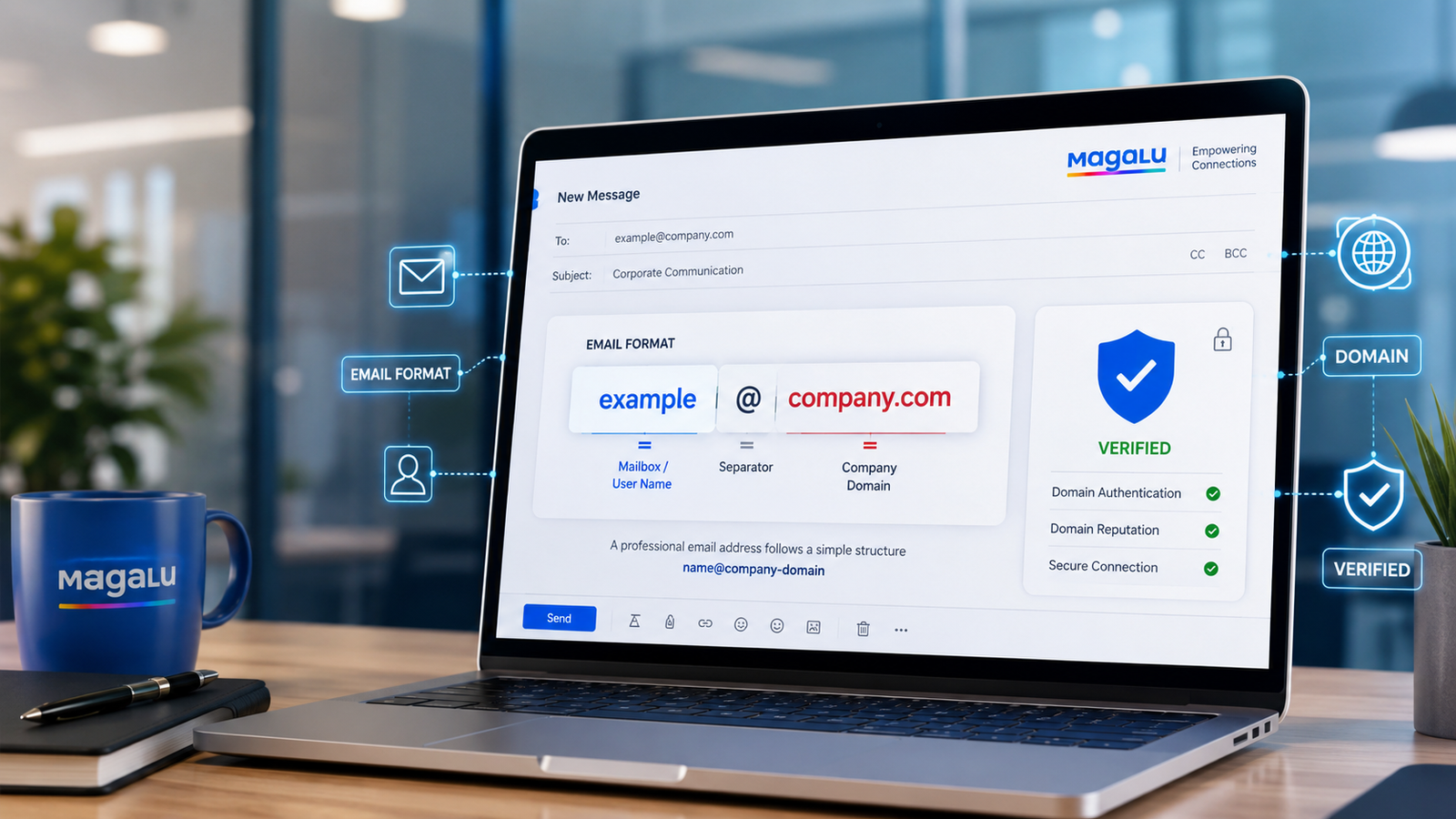
Finding the correct magazineluiza com br email format can be important when you need to contact Magazine Luiza, identify an email address, or understand whether an address associated with the company looks legitimate. A correctly structured business email can also help you avoid sending sensitive information to the wrong recipient.
Magazine Luiza is a major Brazilian retail company, so people may encounter different email addresses depending on the department, service, employee, or communication channel involved. That means there is not necessarily one universal format that applies to every address connected with the company. Understanding the general structure can make it easier to recognize a properly formatted address without assuming that every possible variation is genuine.
This guide explains how business email formats generally work, what the Magazine Luiza domain means, how to recognize common patterns, and what to consider before contacting an address. It also covers practical examples and common mistakes so you can approach business email communication more confidently.
What Is the Magazine Luiza Email Format?
The magazineluiza com br email format refers to the structure used by an email address associated with the Magazine Luiza domain. In general, a business email consists of a mailbox name followed by an @ symbol and a domain.
For example, a simplified business address could follow a structure such as name@company-domain. The exact mailbox naming convention can vary according to the company’s internal systems, employee names, departments, or specific communication purposes. Because of that variation, recognizing the general structure is more useful than assuming there is only one fixed pattern.
Understanding the Domain
The domain is the part of an email address that appears after the @ symbol. For a company-associated address, the domain can help indicate that the mailbox belongs to an organization, but the domain alone should not be treated as proof that a particular message is authentic.
A legitimate-looking address can still be used in misleading communication if the sender’s identity has been manipulated elsewhere. When an email involves payments, account information, passwords, documents, or other sensitive details, the safest approach is to verify the communication through an official company channel rather than relying only on the appearance of the sender address.
How Business Email Formats Usually Work
Companies commonly create email addresses according to internal naming conventions. The mailbox portion may be based on an employee’s first name, surname, initials, a department, or another organizational identifier.
For instance, a fictional company might use formats such as first.last@example.com, firstinitiallastname@example.com, or department@example.com. These are examples of general business-email structures rather than confirmed Magazine Luiza addresses.
Employee-Based Email Addresses
An organization with many employees may use a consistent naming convention to make addresses easier to manage. An employee’s name can sometimes be represented using a combination of first and last names, initials, or other identifiers.
However, naming conventions can change over time. Companies may also have duplicate names, special cases, legacy accounts, or addresses created for specific operational roles. Therefore, a pattern that appears plausible should not automatically be treated as a confirmed address.
Departmental Email Addresses
Some organizations use functional mailboxes instead of individual employee addresses. These may represent customer service, recruitment, media relations, investor relations, legal matters, or another business function.
A departmental address can remain active even when individual employees change, making it useful for ongoing business communication. The exact addresses, though, should be confirmed through an official source before use.
Why the Exact Email Format Matters
Using the correct address is more than a matter of formatting. An incorrect address can result in bounced messages, delays, communication with the wrong person, or exposure of information to an unintended recipient.
This becomes especially important when an email concerns orders, refunds, employment applications, business proposals, account issues, or personal information. A carefully checked address reduces the chance of a simple typing mistake becoming a larger problem.
A Correctly Formatted Address Is Not Necessarily a Verified Address
There is an important distinction between format and verification. An address can look perfectly valid while still being incorrect, inactive, unofficial, or unrelated to the person you intend to contact.
For example, an address following a realistic company naming convention may appear convincing, but that does not establish that the mailbox exists. The safest method is to confirm contact information using a trusted company source or an established communication channel.
Examples of Email Formatting
The following examples demonstrate common business-email structures. They are fictional examples and should not be interpreted as actual Magazine Luiza email addresses.
| Format type | Fictional example | Typical purpose |
|---|---|---|
| First and last name | first.last@example.com | Individual employee |
| Initial + surname | flast@example.com | Individual employee |
| Department mailbox | department@example.com | Functional team |
| General contact | contact@example.com | General inquiries |
| Support mailbox | support@example.com | Customer assistance |
These examples show why the phrase “email format” can have several meanings. It may refer to the structure of an individual employee’s address, a department mailbox, or simply the domain used by an organization.
How to Check Whether an Email Address Looks Legitimate
Before replying to a business email, examine the complete sender address rather than only the display name. Email applications often show a person’s name prominently, but the underlying address is what you need to inspect.
Look carefully for unusual spelling, extra characters, unexpected domains, or substitutions that make an address resemble a legitimate company address. Attackers can sometimes use domains that look similar to real business domains, especially when a recipient is reading quickly.
Check the Domain Carefully
A domain should be examined character by character when the message is important. Small differences can be easy to overlook, particularly when the sender uses a familiar company name in the display field.
A message that appears to come from a well-known company but uses an unrelated or suspicious domain deserves additional verification before you click a link, open an attachment, provide information, or make a payment.
Be Careful With Urgent Requests
Unexpected urgency is another reason to slow down. Messages demanding immediate payment, account verification, password changes, confidential documents, or unusual transfers should be independently verified.
Instead of responding directly to a suspicious message, use a known official communication route and ask whether the request is genuine. This approach is particularly important when the message creates pressure to act before you have time to check the details.
Common Mistakes When Searching for a Magazine Luiza Email
One common mistake is assuming that every employee at a company must use exactly the same email pattern. Large organizations can have different systems, legacy addresses, regional teams, subsidiaries, and specialized mailboxes.
Another mistake is treating a search result as proof that an email address is active. Search engines, directories, social profiles, and third-party databases may contain outdated information. An address appearing somewhere online does not necessarily mean it is still monitored or officially published by the company.
A third mistake is focusing only on the domain while ignoring the rest of the message. Email authenticity depends on more than the address itself. The content, links, attachments, request, timing, and context all deserve consideration.
When You Should Verify an Email Address
Verification is especially important when communication involves financial information, login credentials, identity documents, confidential business information, or unusual requests.
For ordinary, non-sensitive correspondence, a minor uncertainty may simply result in a delivery problem. For sensitive communication, however, the consequences of contacting the wrong address can be much more serious.
Business Communication
If you are contacting Magazine Luiza for a business proposal, partnership, media request, employment matter, or another professional purpose, use a contact channel that the company officially provides for that purpose.
This is generally more reliable than guessing an employee’s address from a suspected naming pattern. If the appropriate department is known, contacting that department directly can also reduce unnecessary delays.
Customer-Related Communication
For customer issues, use the company’s established customer-service channels whenever possible. This can help ensure that your request reaches the correct team and that any account-related information is handled through the appropriate process.
Avoid sending passwords, authentication codes, complete payment-card information, or other highly sensitive credentials through ordinary email.
A Practical Way to Approach Email Verification
Suppose you find an address that appears to follow a plausible Magazine Luiza email format. Rather than immediately assuming it is legitimate, consider what you know about the sender, where you found the address, and why the person is contacting you.
If the message requests something unusual, verify it independently. If the address was obtained from an old document or third-party directory, look for a current official contact route. This simple extra step can prevent many avoidable mistakes.
Magazine Luiza Email Format vs. Email Domain
These two concepts are related but not identical.
The domain identifies the part of the address associated with an organization. The email format describes how the mailbox portion is constructed before the @ symbol.
For example, in a fictional address such as john.smith@example.com, example.com represents the domain, while john.smith represents the mailbox name. A company may have a consistent domain while using several mailbox naming conventions across its systems.
Understanding this distinction is useful when researching business contact information because it prevents the assumption that knowing a domain automatically tells you how every individual address is constructed.
What to Do If an Email Bounces
A bounced email generally means that the message could not be delivered. The reason could be a typo, an inactive mailbox, a full mailbox, a technical issue, or another delivery problem.
Check the address carefully before trying again. If the address came from an old source, look for a more recent official contact method rather than repeatedly sending messages to the same address.
If the matter is important, contacting the relevant company department through an established channel is usually more productive than trying multiple guessed email combinations.
Frequently Asked Questions
What is the Magazine Luiza email format?
The term refers to the structure used for email addresses associated with Magazine Luiza. Business addresses can follow different naming conventions depending on the employee, department, or communication system, so one assumed pattern should not be treated as universal.
Does every Magazine Luiza employee use the same email format?
Not necessarily. Large organizations can have different departments, systems, legacy accounts, and specialized mailboxes. A pattern that works for one known address may not apply to every employee or department.
Can I guess a Magazine Luiza employee’s email address?
You may be able to recognize a possible naming pattern, but guessing does not verify that an address exists or that it belongs to the intended person. For important communication, it is better to confirm the address through a trusted source.
How can I tell whether a company email is genuine?
Check the complete sender address, inspect the domain carefully, consider the context of the message, and be cautious with unexpected requests. If the email asks for sensitive information, payment, credentials, or urgent action, verify the request through an independent official channel.
Is an email domain enough to prove authenticity?
No. A familiar-looking domain is only one part of the verification process. You should also consider the sender, message content, links, attachments, request, and circumstances surrounding the communication.
What should I do if I receive a suspicious email claiming to be from Magazine Luiza?
Do not provide sensitive information or follow suspicious instructions immediately. Instead, verify the communication through a trusted company contact method that you obtained independently rather than using contact details supplied inside the questionable message.
Should I send passwords or verification codes by email?
You should not share passwords or authentication codes simply because someone requests them by email. Treat unexpected requests for credentials or security codes as a warning sign and verify the situation independently.
Why might a business email address stop working?
An address may become inactive because an employee leaves, a mailbox is replaced, a department changes its systems, or the organization updates its communication infrastructure. An older address therefore should not automatically be assumed to remain active.
Conclusion
Understanding the magazineluiza com br email format can help you recognize how business email addresses are structured, but recognizing a pattern is not the same as verifying an address. Employee names, departments, legacy systems, and organizational changes can all affect the way company mailboxes are created and maintained.
When communication is important, especially when it involves personal information, payments, credentials, or confidential documents, verification should come before action. Rather than relying on a guessed address or an outdated directory, confirm the appropriate contact through a trusted and current company channel.
If you are trying to identify or validate a Magazine Luiza email address, take a few extra moments to check the complete address and the context of the message. That small habit can make business communication more reliable and considerably safer.


Leave a Reply